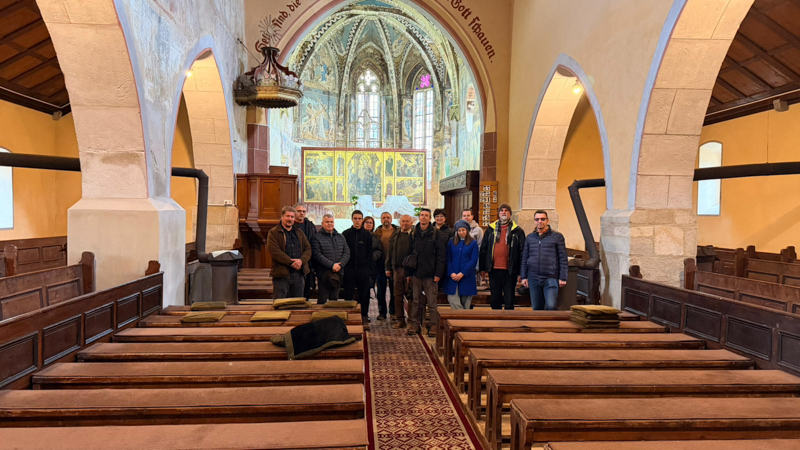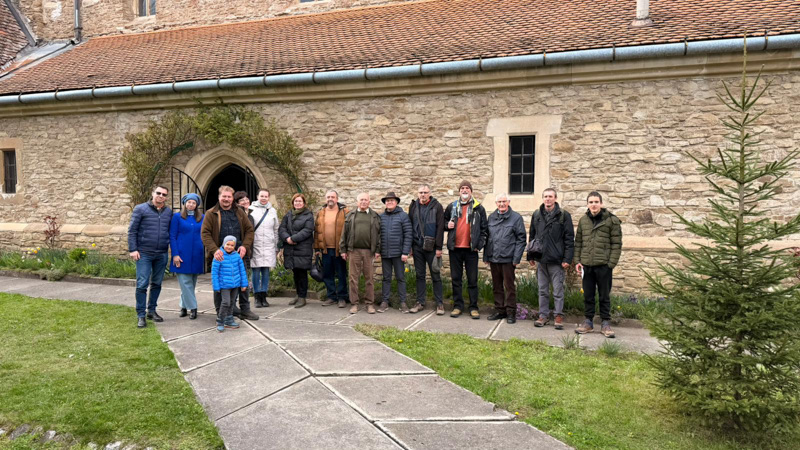
On the occasion of the 700th anniversary of the founding of the Order of Saint George, the Southern Transylvanian Grand Priory organized a pilgrimage on April 11, 2026, bringing together knights and their family members. The 16-member group spent the day visiting several outstanding historical and sacred sites in and around Sighișoara (Segesvár, Schäßburg), sharing in what the jubilee year represents for us: remembrance, community, faith and the preservation of heritage.
The pilgrimage began in the morning in Székelyudvarhely (Odorheiu Secuiesc) and lasted until late evening. Travelling by car, the group followed a route connecting Roadeș (Rádos), Sighișoara (Segesvár), Mălâncrav (Almakerék) and Criș (Keresd). The primary aim was to visit medieval depictions of Saint George in the region, including wall paintings and a winged altarpiece.
First Stop: The Fortified Church of Rádos (Roadeș)
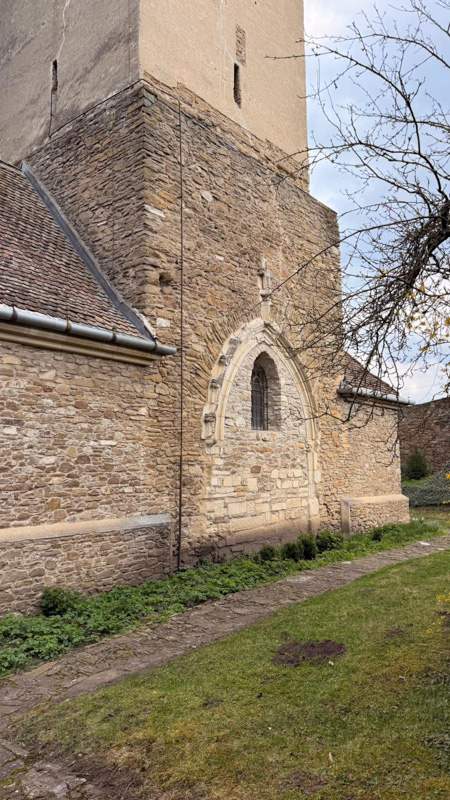
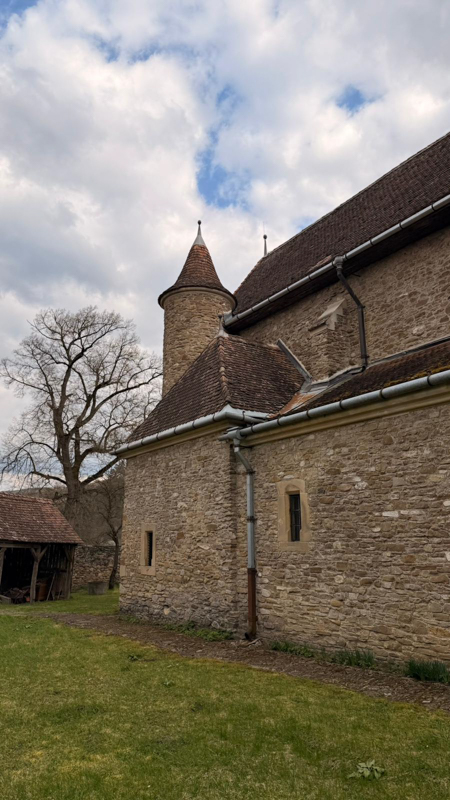
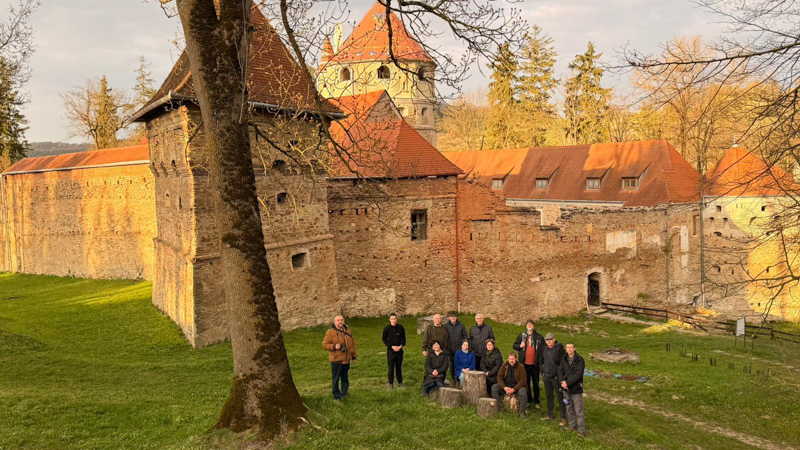
The first location of the pilgrimage was the fortified church of Rádos (Roadeș, Radeln). The participants were met with a sobering sight: the tower had collapsed in 2016, and due to ongoing restoration works on the fortifications, the interior could not be accessed. The church could only be viewed from the outside.
This experience, however, did not discourage the group. On the contrary, it reinforced the recognition that the preservation of our historical and ecclesiastical heritage is not self-evident, but requires continuous and responsible commitment.
The church of Rádos is a characteristic example of Transylvanian medieval heritage, where faith and defense formed a unified system. Such fortified churches served not only religious purposes, but also as places of refuge for local communities for centuries.
Sighișoara (Segesvár): History, Church and a Saint George Fresco
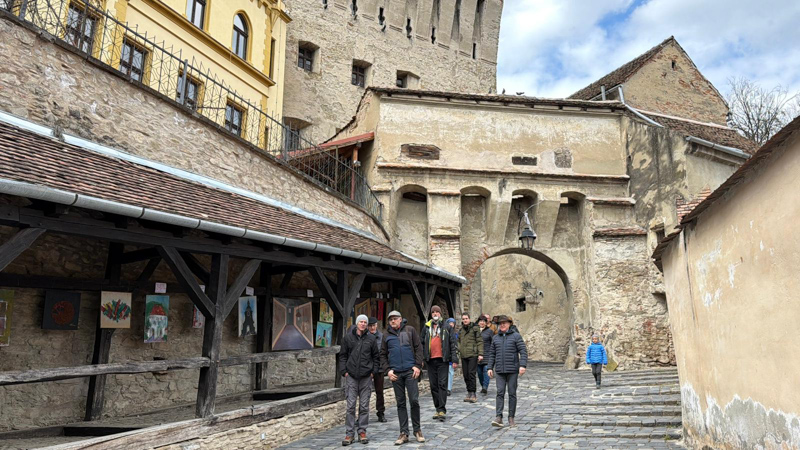
The next stop was Sighișoara (Segesvár, Schäßburg), where the group visited the citadel. Here, our fellow knight, historian Tamás Sashalmi-Fekete, provided an insightful overview of the town’s history and the past of the Hill Church.
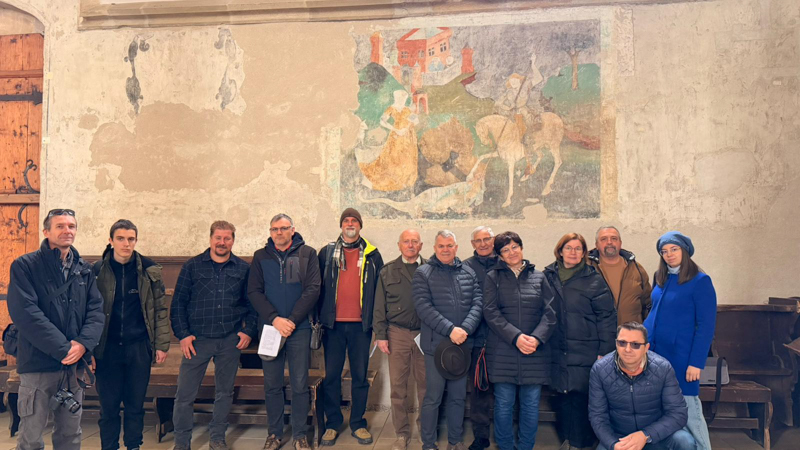
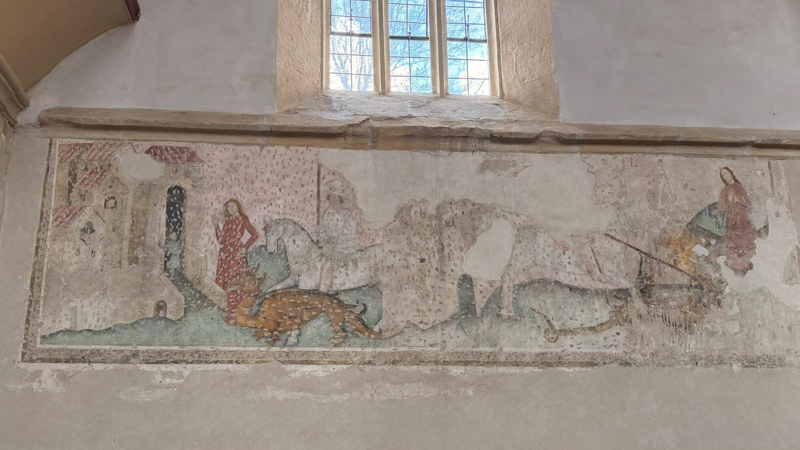
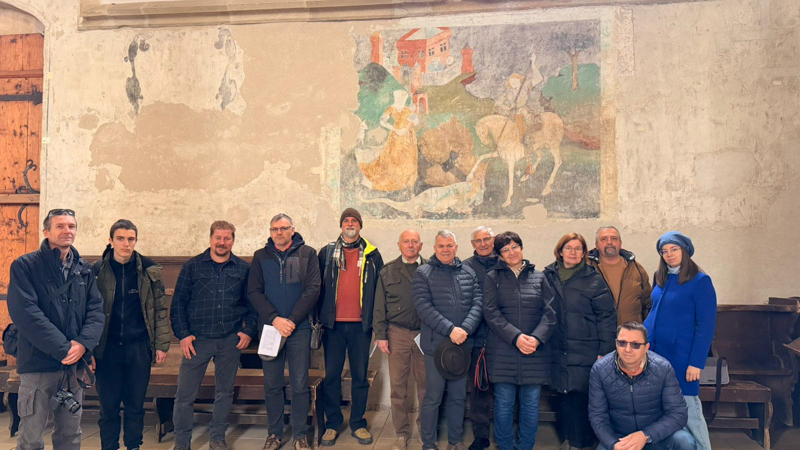
Inside the church, participants received an impromptu yet rich local presentation about the interior decorations, the meaning and origins of the visual elements, and their historical function. A group photo was also taken here, in front of the uncovered Saint George fresco—one of the most meaningful and memorable moments of the day.
The Hill Church of Sighișoara stands as one of the most important sacred centers of the medieval town. Rising above the citadel, it represents not only architectural significance but also the symbolic elevation of faith. The Saint George depiction created a direct connection between the site, the Order’s patron saint, and the spirit of the jubilee year.
Following the visit, participants had lunch at the Deer Restaurant located within the citadel.
Mălâncrav (Almakerék): Preserved Beauty and Medieval Frescoes
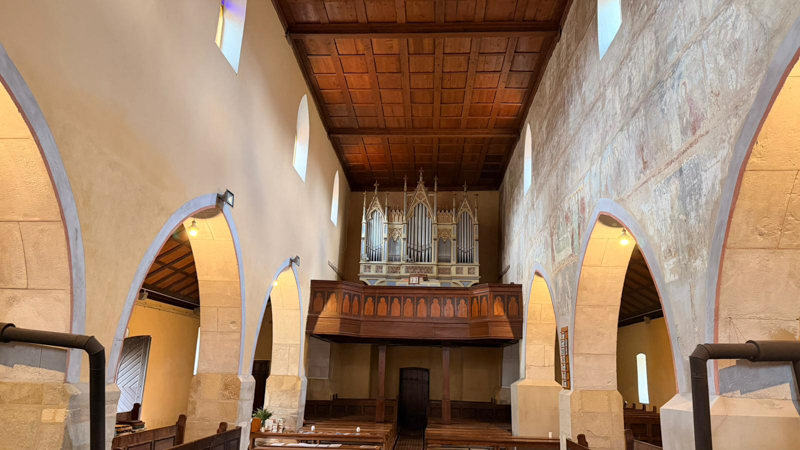
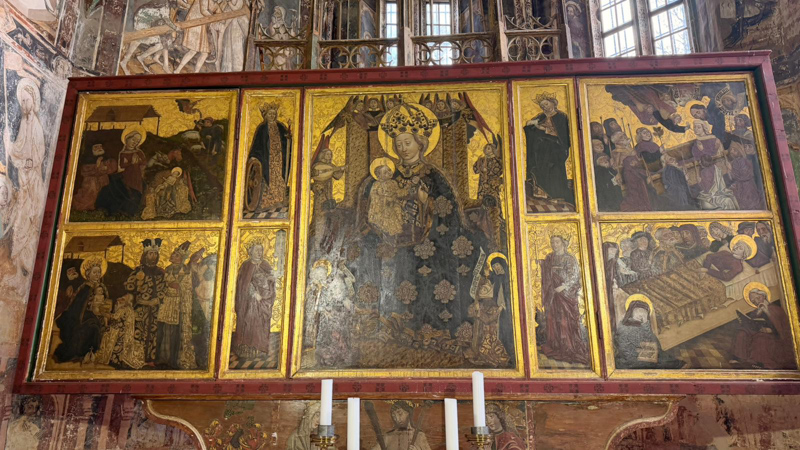
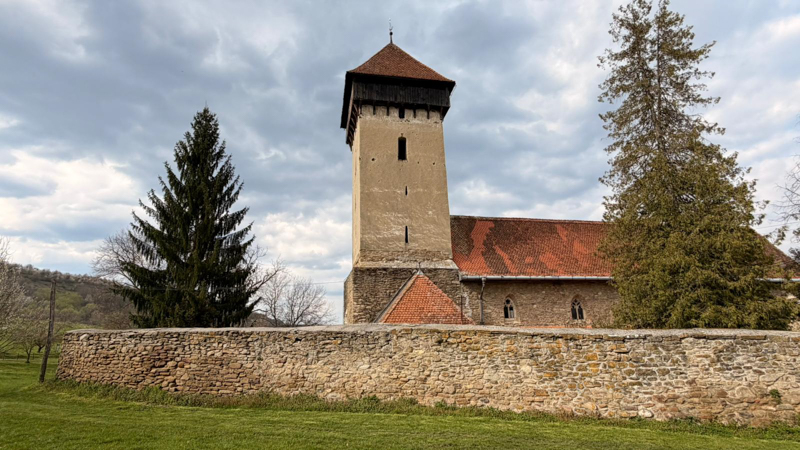
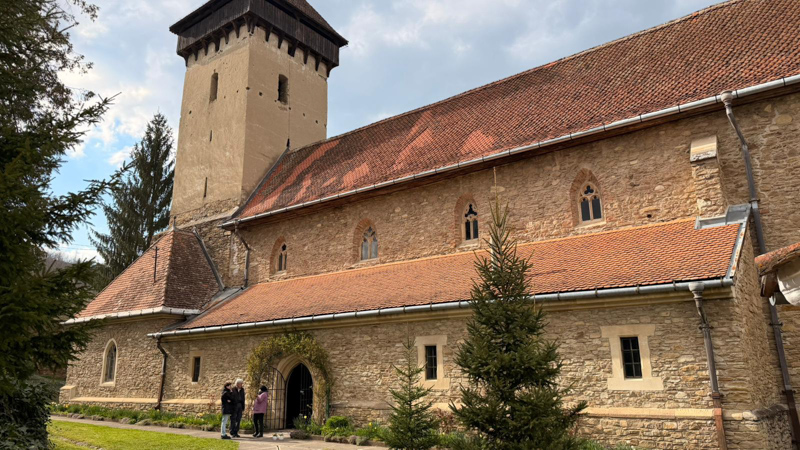
After lunch, the pilgrimage continued to Mălâncrav (Almakerék, Malmkrog), to the Saxon church. Following the difficult experience at Rádos, it was particularly uplifting to encounter this exceptionally well-preserved medieval church, both inside and out.
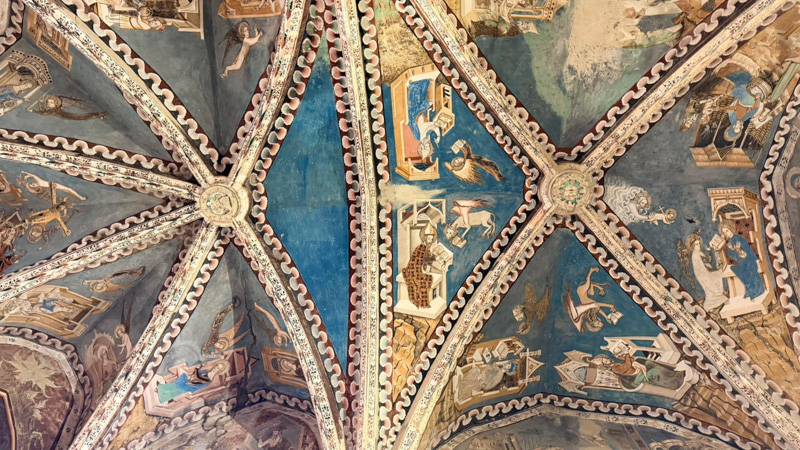
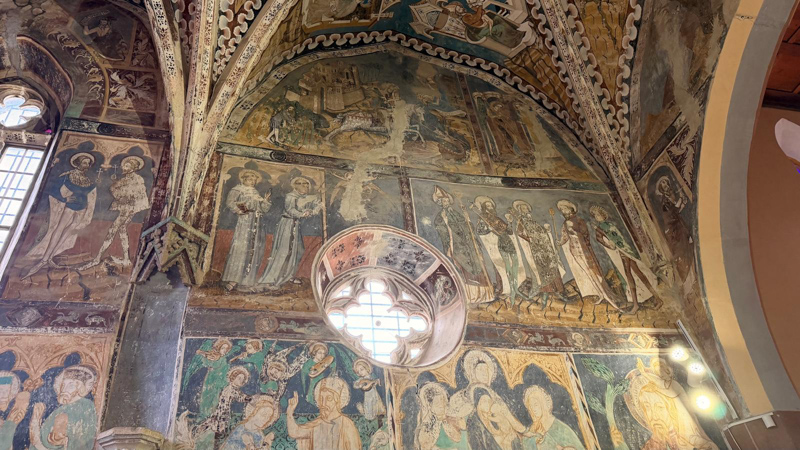
The local community of approximately 1,000 inhabitants—among them around 100 Transylvanian Saxons—takes justified pride in maintaining this heritage. Here, participants encountered one of the most valuable ensembles of medieval artworks in Transylvania: the frescoes covering the church walls belong to the largest continuous cycles of their kind in the region.
The church of Almakerék stands as a remarkable example of heritage preservation. The 14th–15th century wall paintings represent not only artistic value, but also centuries-long carriers of faith and communal memory.
Final Stop: Keresd (Criș) and the Bethlen Castle
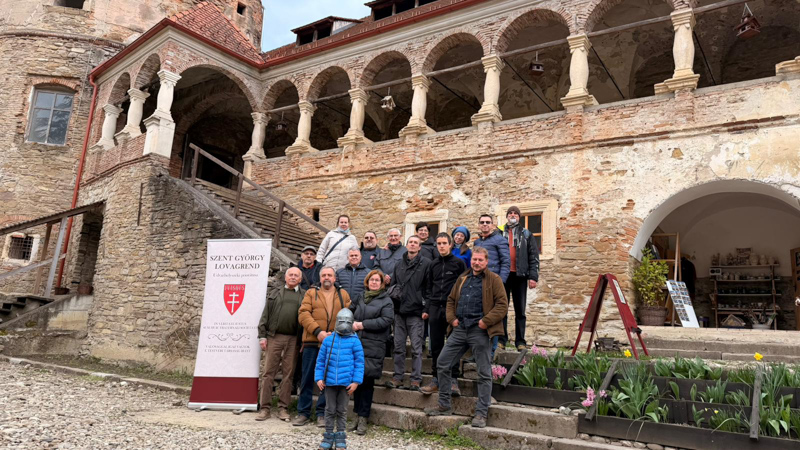
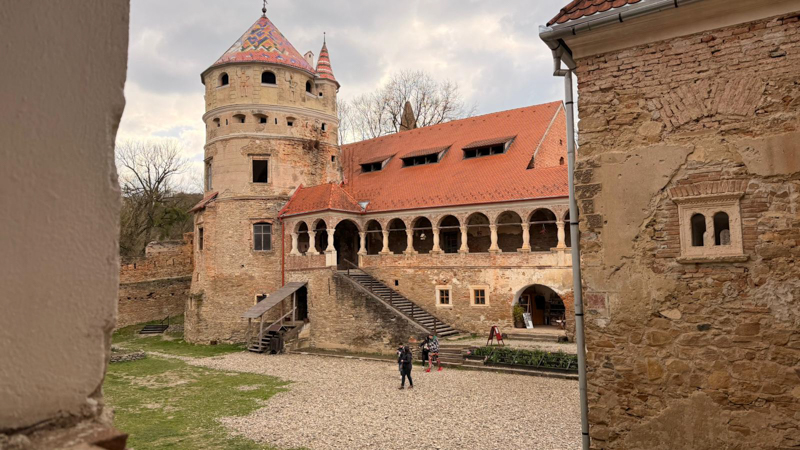
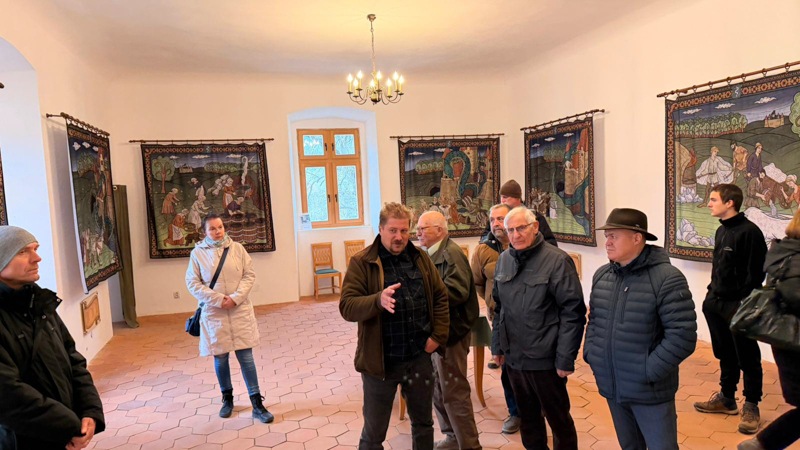
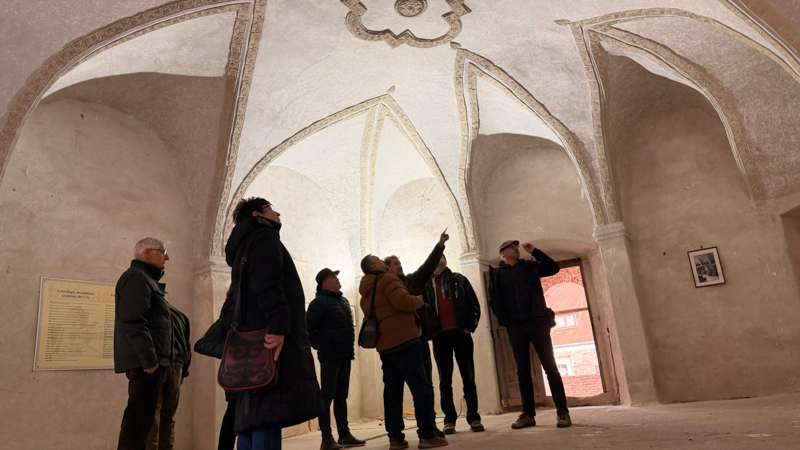
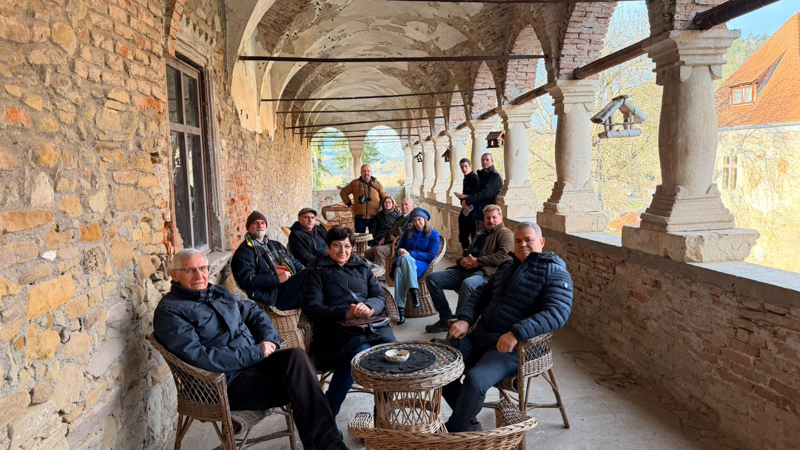
The final destination of the pilgrimage was the Bethlen Castle in Keresd (Criș, Kreisch), where our fellow knight Levente Zólya, acting as Castellan, guided the group. His detailed and engaging presentation introduced the history of the building, its turbulent past, and the already restored interiors.
For the participants, this visit provided a fitting conclusion to the day. The castle simultaneously evoked Transylvania’s historical past, the tension between destruction and survival, and the hope of renewal.
The Bethlen Castle is one of the region’s significant Renaissance noble residences, bearing witness to the fact that the fate of historical heritage ultimately depends on the existence of community, will and responsibility to carry it forward.
A Shared Experience and Spiritual Renewal
The pilgrimage lasted from 9 a.m. to 9 p.m., and participants unanimously described it as meaningful, valuable and spiritually enriching. The visited sites not only provided historical insight, but also reinforced the idea that the 700-year heritage is not merely a matter of remembrance, but a present-day responsibility.
The destruction seen in Rádos, the testimony of Segesvár, the preserved beauty of Almakerék and the renewal in Keresd together formed a narrative arc deeply aligned with the mission of the Order of Saint George.
The 700-year heritage calls not only for remembrance, but also for a journey..