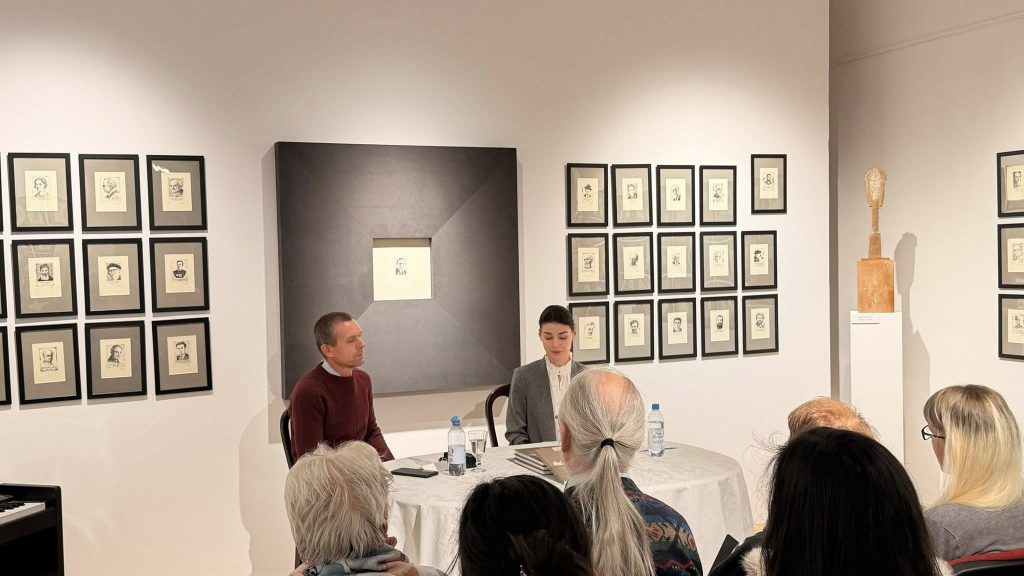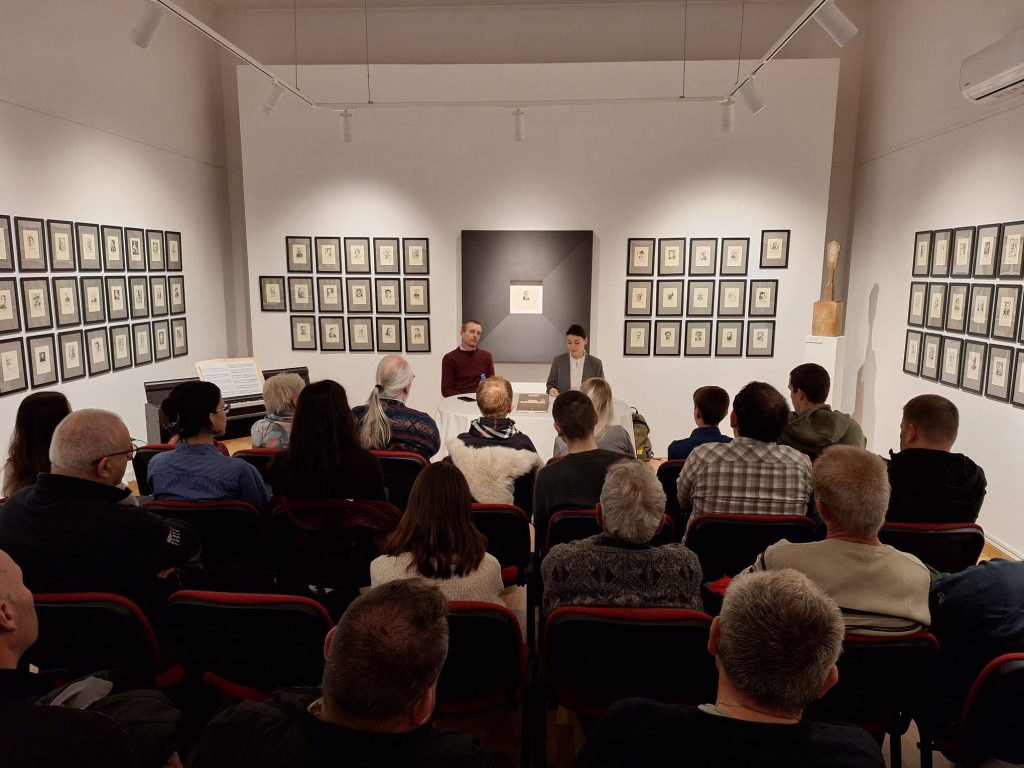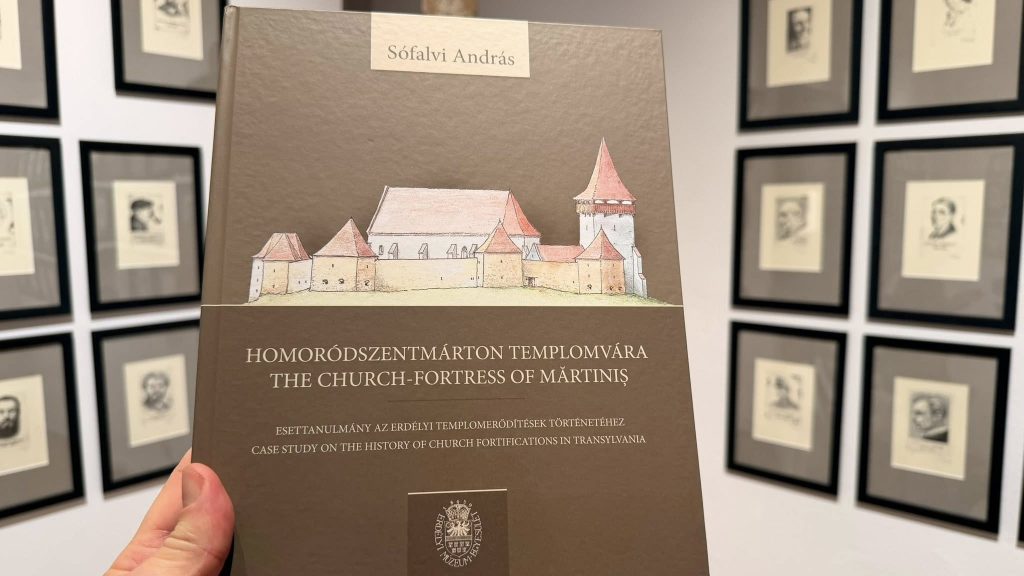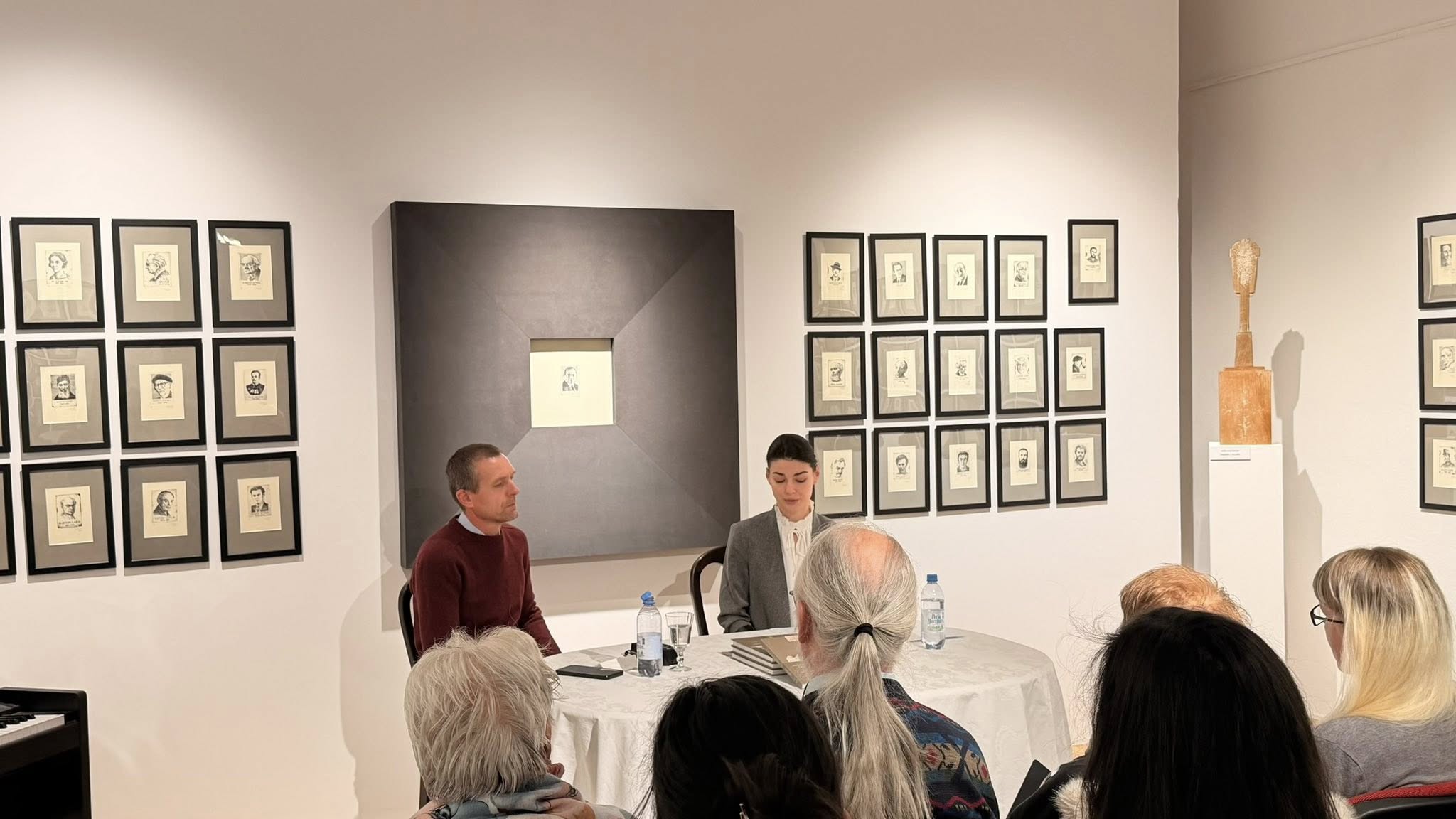
The Haáz Rezső Museum in Székelyudvarhely (Odorheiu Secuiesc) hosted the presentation of the latest volume by our fellow knight, Dr. András Sófalvi.
The work entitled “The Fortified Church of Martinis”, published in Hungarian and English, is not merely a summary of the results of an archaeological research, but a work that enriches community memory and fills a gap.
Through years of persistent and thorough research, the author explores the past of a characteristic Székely Land fortified church, presenting its construction history, military role and community functions.
His work goes beyond the local framework: it places the examined heritage in broader historical and European contexts, thereby contributing to a deeper understanding of our cultural identity.
The particular value of the volume is that it makes scientific thoroughness accessible in an easily understandable form, thus building a bridge between the profession and the community.
At the centre of the book stands a characteristic Székely Land fortified church from the Principality period, that of Martinis. Contemporary written sources from the 16th–17th centuries provide a sketchy picture of the antecedents and circumstances of its creation, as well as of its functioning. The construction history of the fortified church, its military components and multifunctional buildings became reconstructible through multi-layered archaeological research as well as geophysical and dendrochronological investigations.
The small relics of material culture unearthed provide a nuanced insight into the use of the community, military and value-preserving building complex established around the medieval parish church. Within a comprehensive comparative material, the author extensively analyses the contemporary process of Székely and Saxon fortified church construction, together with the presentation of lesser-known church fortifications built in other parts of the Carpathian Basin. Furthermore, by examining the church fortifications of rural communities in Western and Central European as well as Mediterranean regions, he highlights analogous pan-European medieval–early modern self-defence solutions with their local characteristics.
It is in this perspective that the fortified church of Martinis appears before us.
The results of the research are made vivid and interpretable by colourful illustrations: excavation photographs, drawings, maps, reconstructions and finds, not only for specialists but also for interested lay readers.
The book was published at the end of 2025 under the auspices of the Transylvanian Museum Association, and the publication was also supported by the Udvarhelyszék Priory of the Order of Saint George.
For us, this work is not only a scientific achievement, but also the living of the chivalric ideal: the exploration, preservation and transmission of the values of the past in the service of the community.
We look upon the work of our fellow knight with recognition and gratitude.
Exploring the past is a service to the future.