
The Transylvanian Beginnings
The Modern History of the Order of Saint George (Szent György Lovagrend) in Transylvania
The Rebirth of a Community After the Fall of Communism
The political transformation in Romania in 1989 marked not only a major historical turning point, but also the end of a long period during which civic initiatives, religious communities, and historical traditions could exist only in a limited way—or not at all. Following the collapse of the dictatorship, communities once again had the opportunity to reconnect with their historical roots, spiritual heritage, and the broader traditions of Christian Europe.
In this changed historical context, interest in the chivalric ideal was also reborn. In the uncertainty of the post-communist years, faith, tradition, community responsibility, and selfless service offered many people a renewed moral compass upon which to build. It was within this process that the modern Transylvanian history of the Order of Saint George began.

A New Beginning in Visegrád
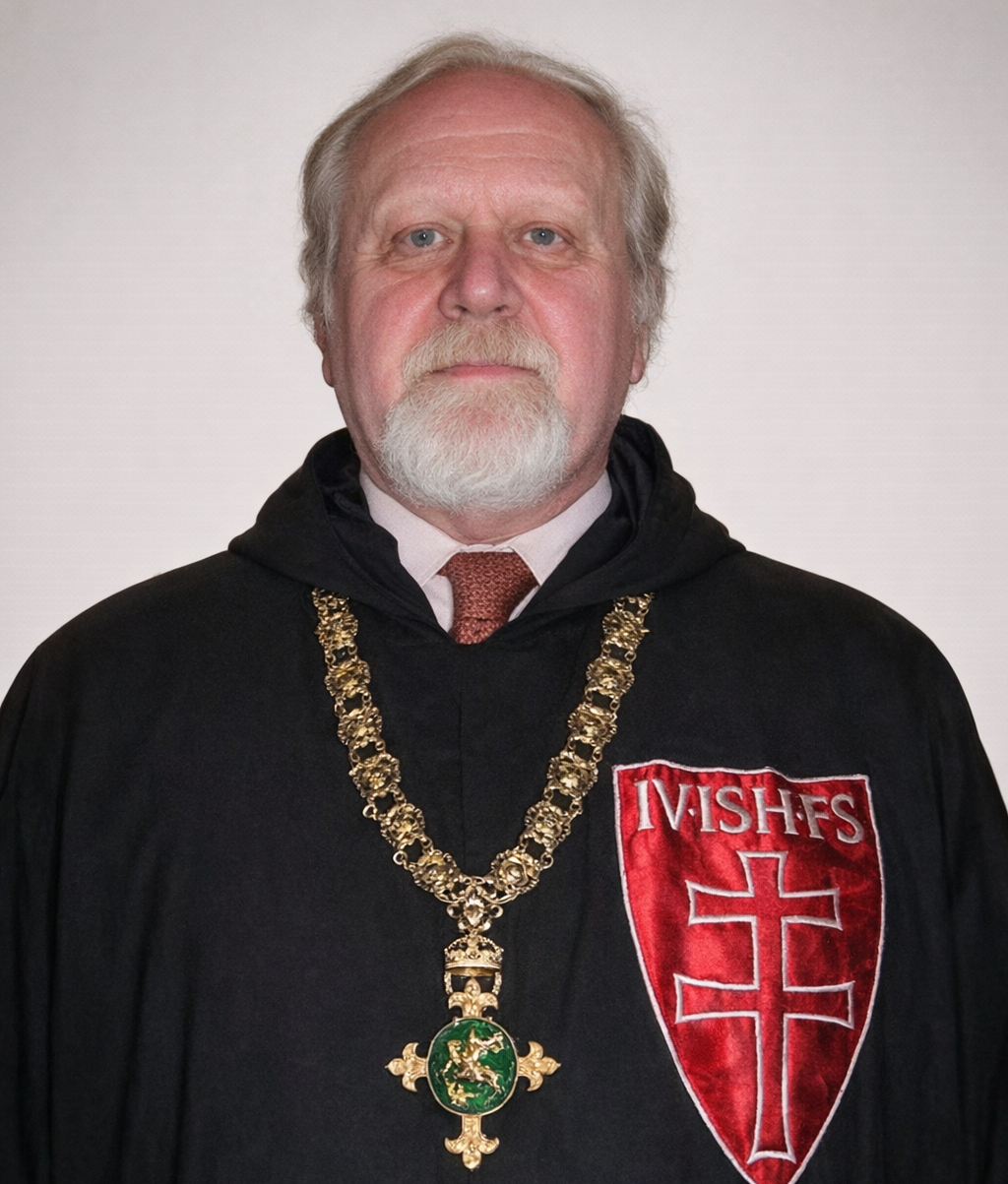
The first wave of reorganization emerged in Hungary. In December 1991, a committed community in Visegrád resolved to revive the modern successor of the historic Order founded in 1326 by King Károly Róbert (Charles Robert of Anjou). Among the founders were several individuals who played a decisive role in laying the organizational and spiritual foundations of the modern Order.
One of the key figures in this early work was Chancellor of the Order, László Cseke Sr., who from the outset represented a vision of cross-border national community and unity. Under his guidance, the Order was not intended to exist merely as a historical remembrance, but as a living community capable of serving faith, culture, society, and those in need in the present day.
The First Transylvanian Connections
In 1993, the Order of Saint George launched the Medieval Academy of Esztergom, with the aim of bringing Hungarian communities across the Carpathian Basin closer together and creating an intellectual forum for history, tradition, and national connection.
Among the first invitees was Tibor Eigel Sr., whose participation and later active involvement proved to be of decisive importance. Thanks to his personal commitment, the number of Transylvanian participants steadily increased from 1995 onward. The Medieval Academy created both the intellectual and relational foundations upon which the later tradition of the annual Summer University could be built.
The Idea of an Organized Transylvanian Community
Even before the formal establishment of a Transylvanian structure, it had become clear that the modern legacy of the historic Order should take organized communal form in Transylvania as well.
This mission was led by Tibor Eigel Sr., who, as county school inspector, geography teacher, and community organizer, played a major role in preparing the Order’s regional structure.
Working together with László Cseke Sr., the goal was to create a community rooted in Christian chivalric culture, the preservation of historical and cultural heritage, and charitable service.
From the beginning, the vision extended far beyond remembrance. Scientific conferences, historical reenactments, cultural initiatives, and community service were all seen as ways to create living value in the present.
The Historic Milestone of 2004
By decision of the Magistrate of the Order, Chancellor László Cseke formally entrusted Tibor Eigel Sr. on July 3, 2004, with organizing the Székelyföld Priory of the Order of Saint George.
Years of preparatory work soon led to tangible results.
On August 28, 2004, the first investiture ceremony in Transylvania took place in the Millennium Church of Csíkszereda (Miercurea Ciuc), designed by architect Imre Makovecz. During the solemn Holy Mass celebrated by Auxiliary Bishop József Tamás, twelve individuals were invested.
This was not merely a ceremonial occasion, but the official historical beginning of the Order’s organized presence in Transylvania.
The investiture in Csíkszereda transformed into reality a vision that had been taking shape for years: that the Order of Saint George would become a living, organized, and serving community in Transylvania as well.
The Development of the Transylvanian Organizational Network
Following its establishment, the Transylvanian organization gradually built its own structure. The system of Grand Priory and regional priories reflected both the historical-geographical diversity of Transylvania and the practical need for community organization. The founder and first leader of the Transylvanian Priory and later Grand Priory was Grand Prior Tibor Eigel, who coordinated the regional network. Local leaders served as priors in the territorial communities, representing the spirit of the Order and organizing its activities. This evolving network enabled the Order of Saint George to maintain a coordinated presence across multiple regions of Transylvania through cultural, communal, historical preservation, and charitable activities.
The Summer University as an Intellectual Forum
One of the most important intellectual milestones of the early Transylvanian period was the XVII Summer University, held in 2010—an event that many within the Order’s Transylvanian memory still refer to as the Medieval Academy. The event took place at the Lázár Castle in Gyergyószárhegy (Lăzarea) and the nearby Franciscan monastery—two locations carrying profound historical and spiritual significance. The Summer University was conceived not as an internal gathering, but as an open and high-level intellectual forum. The lectures, shared reflection, prayer, and community presence made it clear that the Transylvanian reorganization of the Order was not simply an act of historical remembrance, but a future-oriented communal reality. This intellectual orientation has remained one of the defining pillars of the Order’s life ever since, and the Summer University continues to be one of its most important annual events.
Faith, Tradition, Service
From the beginning, the history of the Order of Saint George in Transylvania unfolded under the spirit of its threefold motto:
Faith – Tradition – Service
This is not merely a slogan, but an internal order that has shaped the community from the outset.
Religious life, the preservation of historical and cultural heritage, historical reenactment, scholarly engagement, and service to those in need are all different expressions of this mission.
The decades since the organization’s founding demonstrate that the original vision became a living communal practice.
Members of the Order continue to actively participate in preserving cultural values, strengthening community life, charitable service, and transmitting historical consciousness.
Heritage and Continuity
The journey from the first connections in 1993 to the investiture in Csíkszereda in 2004, and then to the gradual development of the Transylvanian organizational structure, clearly demonstrates that the modern history of the Order of Saint George in Transylvania is not a temporary revival, but the result of sustained community building. Since then, the Transylvanian community of the Order has continuously carried out its mission of preserving values and serving others. The original determination has become a living reality—one that continues to inspire and unite those committed to Christian chivalric values, historical consciousness, and service in the present day. The history of the Order of Saint George in Transylvania is therefore not merely a matter of the past, but an active mission in the present.
The modern rebirth of the Order of Saint George in Transylvania is proof that historical heritage remains alive only when it becomes community, is transformed into service, and continues to offer direction in the present.
Further information about the Order
Contact us
Feel free to contact us with your questions or collaboration inquiries.
You can also follow our activities on our social media platforms.