
31st Dr. István Bárdos Summer University
Székelyudvarhely (Odorheiu Secuiesc), June 22–27, 2025
Székelyudvarhely (Odorheiu Secuiesc), June 22–27, 2025
In June 2025, Székelyudvarhely hosted the 31st Dr. István Bárdos Summer University, organized by the Udvarhelyszék Priory of the Order of Saint George. Continuing a tradition of more than three decades, the event brought together participants interested in history, culture and community life.
The Summer University is, in essence, a traveling international event of the Order of Saint George, extending beyond national borders, where the Scientific Section of the Order presents its work. On the one hand, renowned experts share the latest results of their research; on the other hand, the event provides an appropriate framework for the transmission of knowledge accumulated within the Order’s community.
Within the framework of the event, participants were offered professional lectures, historical and cultural programs, as well as community activities.
One of the most significant moments of the Summer University was the Investiture Ceremony, which took place in the Saint George Parish Church in Odorheiu Secuiesc, where 14 postulants took the knightly oath and joined the community of the Order.
The full summary video of the event is available here:
The Programs of the Summer University
The event was organized into several professional sections, covering topics such as monument preservation, heritage tourism, archaeology and religious traditions.
The lectures were held in the conference hall of the Saint Pio Retreat House.
. .
Professional Lectures
A selection of the lectures presented at the Summer University has been summarized below. Some of them can be viewed on the YouTube channel of the Udvarhely Seat Priory of the Order of Saint George, grouped as follows:

Historical Exploration and Interpretation of the Past




Gold, Silver and Salt – The Hidden Engines of the Medieval Economy
Speaker: Dame Dr. Zsuzsanna J. Újváry, retired Associate Professor – Pázmány Péter Catholic University, Faculty of Humanities and Social Sciences; full member of the Saint Stephen Academy
Lecture title: Mining of Precious Metals, Non-Ferrous Ores and Salt in the Kingdom of Hungary and Transylvania in the Middle Ages and the Early Modern Period
Dr. Zsuzsanna J. Újváry’s lecture presented, within a comprehensive historical context, one of the fundamental pillars of the economic strength of the medieval and early modern Kingdom of Hungary: the role of mining. The lecture highlighted that, during this period, the Kingdom of Hungary was one of Europe’s leading regions in the production of precious metals. The mining towns of Transylvania and Upper Hungary were not only of regional importance, but were also integrally connected to the economic circulation of Europe, particularly through gold and silver production.
In the 14th and 15th centuries, the demand for gold increased across Europe, driven in part by the spread of gold-based monetary systems. In this process, the Kingdom of Hungary played a prominent role: the mines of Baia Mare (Nagybánya) and Kremnica (Körmöcbánya) supplied significant quantities of precious metals, from which coins such as the gold florin and the ducat were minted. These coins were not only economic instruments, but also carried political and representational significance, reflected in the depiction of saints and royal symbols on them.
The lecture also devoted special attention to the functioning and institutional background of the mining towns. Mining, supervised by the Royal Chamber, operated within a well-developed institutional system that ensured control over extraction, processing and coinage. Mining was not merely an economic activity, but also a force shaping urban development and social organization, contributing to the strengthening of the urban bourgeoisie and to technological progress.
The presentation of salt mining provided a particularly vivid insight into everyday work and its economic significance. Salt, as a strategic raw material, held key importance for state authority, and its extraction and distribution were strictly regulated. Through the examples of the mines of Praid and Maramureș, the lecture illustrated the working conditions of miners, the forms of remuneration, and the technical challenges of extraction.
One of the key conclusions of the lecture is that without understanding the functioning of the medieval economy, the historical development of the region cannot be fully understood. Mining was not merely an economic background, but a determining factor shaping political power, social structures and cultural development. The mining regions of Transylvania are therefore not only former industrial centers, but also defining elements of historical heritage that continue to play a role in shaping identity today.
Watch the lecture:
Wooden Bell Towers – Tradition, Structure and Craftsmanship
Speaker: Knight Dr. Konstantin Vukov, retired Associate Professor, Grand Prior of Budapest
Lecture title: The Architecture of Wooden Bell Towers and Carpentry Craftsmanship in the Székelyudvarhely (Odorheiu Secuiesc) Region
Dr. Konstantin Vukov’s lecture explored the world of wooden bell towers in Székely Land, presenting their architectural and structural characteristics with remarkable detail. The presentation highlighted that these structures represent not only aesthetic value, but also the imprint of a highly developed traditional carpentry craft, the knowledge of which has been passed down from generation to generation through practical experience.
A central idea of the lecture was that the structure of wooden bell towers is a consciously designed system, in which each element has a precise function. The base beam grid ensures the stability of the foundation, while the posts, braces and cross-bracings of the tower body provide structural rigidity. The movement of the bell and wind loads generate significant forces, which these traditional structural solutions are capable of managing.
Special attention was given to the system of carpentry joints, one of the most important elements of traditional architecture. Mortise-and-tenon joints, lap joints and notched connections serve not only structural purposes, but also function as carriers of transmitted craftsmanship knowledge. The lecture emphasized that these joint types are primarily designed to absorb compressive forces, which fundamentally determines the behavior of the entire structure.
The presentation also addressed formal characteristics: the transition from the square-based tower body to the octagonal spire, the construction of the shingle roofing, as well as the details of the tower “skirt” and bell chamber—all demonstrating the close unity between form and structure. Examples from different settlements—Csókfalva, Kecsetkisfalud and Egrestő—clearly illustrated local variations within a shared construction logic.
One of the key conclusions of the lecture is that the knowledge of traditional carpentry was continuously transmitted over centuries, operating on essentially the same principles from the 13th to the 19th century. Surveys and documentation therefore carry not only scientific value, but also serve as a foundation for future restoration efforts.
The final message of the presentation is that wooden bell towers are not merely architectural monuments, but carriers of a living system of knowledge. Their understanding and preservation are not only tasks of heritage protection, but also a cultural responsibility.
Watch the lecture:
Layers Beneath the Ground – Reinterpreting the Székelytámadt Fortress
Speaker: Knight Dr. András Sófalvi, archaeologist-historian, Haáz Rezső Museum
Lecture title: Results of the Archaeological Research of the Székelytámadt Fortress in Székelyudvarhely (Odorheiu Secuiesc)
Dr. András Sófalvi’s lecture presented previously hidden layers of the medieval past of Székelyudvarhely (Odorheiu Secuiesc) through the latest archaeological research conducted at the Székelytámadt Fortress. Located in the present-day city center, the fortress is one of the most significant archaeological sites in Székely Land, and its history is closely intertwined with the political and social transformations of the region.
Based on the excavations, the current form of the fortress was established following the Székely uprising of 1562, on the site of a former Dominican monastery. The regularly planned fortification, reinforced with bastions and a defensive wall system, served not only a military function in the 16th–17th centuries, but also acted as a center of Székely administration and governance.
Research, which gained renewed momentum in 2021, has focused particularly on the western section of the fortress, where traces of multiple construction phases have been uncovered. The excavations identified a two-phase defensive wall, a zwinger system, and a casemate corridor, above which a former row of buildings once stood. The presence of forked embrasures and various defensive structures confirms the existence of a highly developed defensive system.
Findings pointing to earlier, Árpád-era antecedents are of particular importance. The excavations revealed remains of a Roman road surface, traces of 13th-century sunken wooden structures, and various everyday objects, all indicating that the site had played a significant role long before the construction of the fortress.
One of the greatest challenges of the research has been the several-meter-thick layers accumulated over centuries, preserving traces from the Bronze Age to the 19th century. At the same time, this stratification offers the opportunity to interpret the site as a complex historical entity.
One of the key messages of the lecture is that the Székelytámadt Fortress is not merely a fortification, but a historical space where archaeology, urban history and collective memory intersect. The results of the excavations contribute to making the past of Székelyudvarhely (Odorheiu Secuiesc) not only better known, but also open to reinterpretation.
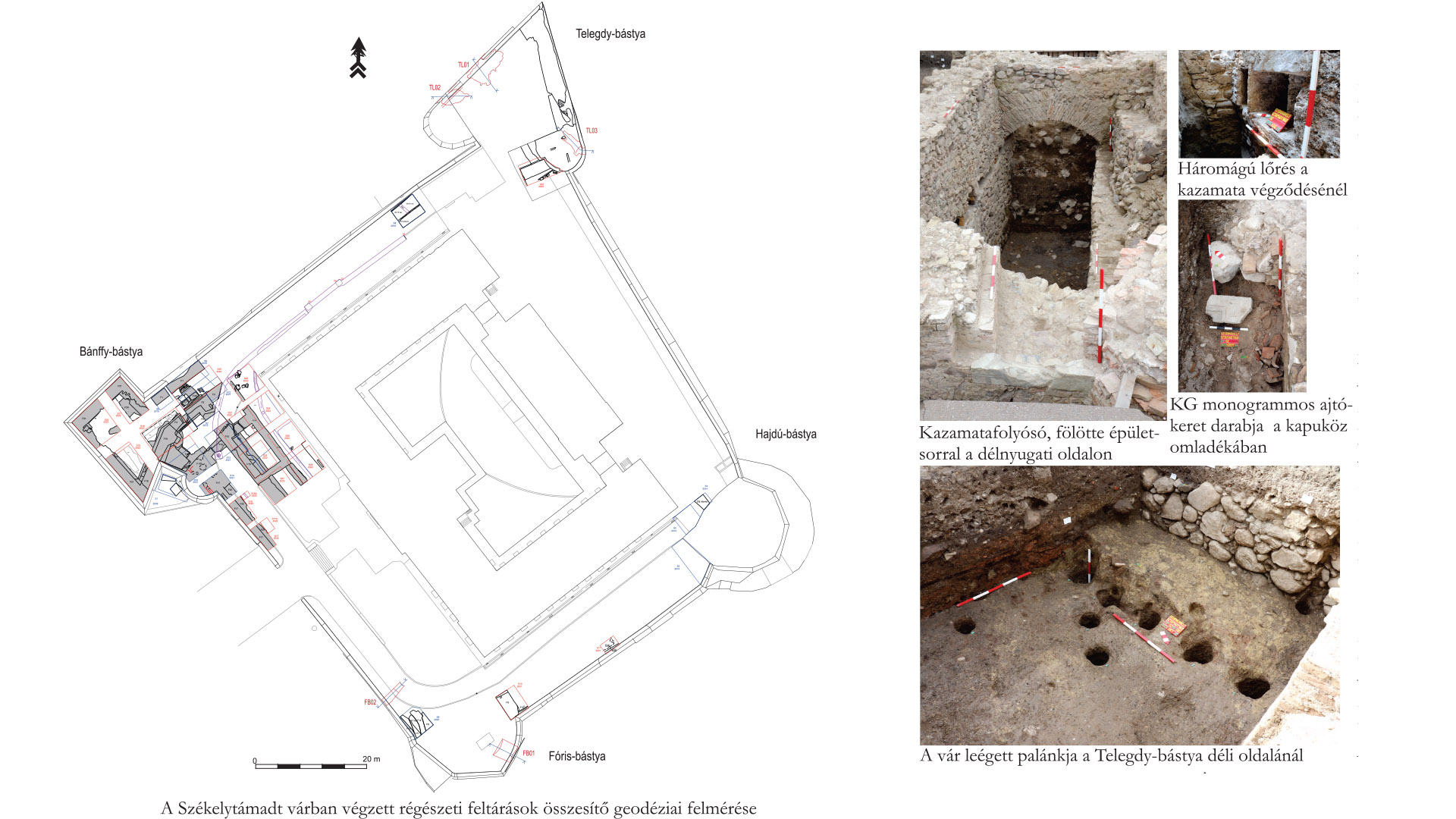
Watch the lecture:
A Life in the Service of the Community – The Example of Margit Berényi
Speaker: Knight Rev. László Koncsag, parish priest – – Szentegyházasfalu (Vlăhița)
Lecture title: How Did Margit Berényi Become a Community Educator?
Rev. László Koncsag’s lecture presented the power of community service and dedication through the life story of an exceptional individual. Margit Berényi’s career began within the framework of the traditional teaching profession, but soon extended far beyond it: through her work, she became a true community educator who not only taught, but actively shaped her environment and community.
She began her teaching work under extremely challenging conditions, particularly among the children of working-class families in Szentkeresztbánya (Vlăhița). Education was often hindered by social difficulties, poor hygienic conditions and the lack of a supportive family background. Margit Berényi, however, did not merely adapt to these circumstances, but actively sought to change them: she visited families, worked to improve the living conditions of workers, and gave meaning to learning by awakening the children’s interest.
During her work in Szentegyházasfalu (Vlăhița), her activity further expanded. In addition to teaching, she played a key role in organizing community life: she led youth groups, held handicraft and drama sessions, and, as part of practical education, involved children in gardening and various crafts. Her dedication to beekeeping is particularly noteworthy, as it not only supplemented her livelihood, but she also passed on her knowledge to others, even to the level of professional examination.
She also played a significant role in the religious and spiritual life of the community. She actively participated in the organization of church life, religious education, teaching of singing and various spiritual activities. She believed that the education of children could not be separated from the education of families, and therefore placed great emphasis on shaping the mindset of parents as well.
One of the most important messages of the lecture is that true education extends beyond the framework of the school: it must address the entire community. The life example of Margit Berényi demonstrates that a dedicated individual can initiate lasting change within a community, if knowledge, faith and human commitment are lived in unity. Her work remains an inspiring example of how a vocation can become a form of service.
Symbols and Meanings – The Visual Language of Székely Identity
Speaker: Knight János Mihály, historian, Institute for National Strategy
Lecture title: Székely Symbols Then and Now
János Mihály’s lecture presented the historical development and contemporary interpretations of the Székely system of symbols, with particular emphasis on the meanings embedded in coats of arms, seals and flags. A central idea of the lecture was that symbols are not merely decorative elements, but condensed expressions of collective identity, preserving the historical consciousness of the Székely community across centuries. The presentation also addressed inaccuracies in the use of symbols in the modern era.
The lecture offered a detailed analysis of the motifs of the “old” Székely coat of arms, including the armored arm, the sword, the heart, the bear’s head, as well as the sun and the crescent moon. These elements form a complex symbolic system, simultaneously referring to military roles, loyalty, communal belonging and a worldview embedded in a cosmic order. The various historical representations and versions also demonstrate that symbols are not static, but evolve in response to the political and social conditions of each era.
An important part of the presentation focused on the use of seals and the visual representation of the community. The seals of the three Székely estates, as well as those of towns and Seats, were used not only to authenticate legal documents, but also to express communal identity. Latin inscriptions and heraldic elements formed a coherent system that also reflected the political and social status of the Székely people.
Beyond the historical overview, the lecture also addressed questions related to the modern use of symbols. Contemporary interpretations of the Székely flag and coat of arms, as well as issues of heraldic accuracy, highlight the ongoing dialogue between historical heritage and present-day identity-building. The speaker emphasized that the authentic use of symbols is not only an aesthetic matter, but also a responsibility toward historical tradition.
One of the key conclusions of the lecture is that the interpretation of symbols goes beyond historical knowledge: it contributes to shaping and strengthening the self-image of a community. Székely symbols are therefore not only relics of the past, but living, identity-forming forces in the present, helping to navigate the space between tradition and modernity.
Watch the lecture:
Sword, Oath and Chosenness – The Deep Layers of Warrior Culture
Speaker: Knight Tamás Sashalmi-Fekete, historian, Hungarian Institute of Research, Historical Research Centre, Magyarságkutató Intézet, Történeti Kutatóközpont
Lecture title: The Sword Planted in the Ground, the Oath of Loyalty and the Chosen – European and Eastern Features in the Chivalric and Warrior Culture of the Kingdom of Hungary
Tamás Sashalmi-Fekete’s lecture examined one of the most ancient and profound symbolic elements of warrior and chivalric culture: the role of the sword, with particular focus on the ritual of the “sword planted in the ground.” The central idea of the lecture was that the sword is not merely a weapon, but a bearer of meaning, symbolizing power, oath and communal commitment.
The presentation traced ritual practices associated with the sword back to the Bronze Age. In the Carpathian Basin, several sites have yielded swords placed in unusual ways—inserted vertically into the ground or arranged in deliberate patterns—pointing to a complex ritual system. These findings suggest that the sword already carried sacred significance in prehistoric times.
The lecture placed special emphasis on medieval sword finds from Székely Land, which represent a unique phenomenon. The swords found planted in the ground in areas such as Páva, Bodza, Dálnok and the Pricske Peak indicate that the tradition of sword rituals persisted for centuries. These finds are not simply weapons, but traces of a worldview in which warrior identity and ritual thinking were closely intertwined.
In addition to historical examples, the lecture also addressed oath-taking and territorial rites associated with the sword. According to medieval tradition, a sword driven into the ground both marked the claimed territory and expressed the oath of loyalty connected to it. A similar motif appears in the legend of the Saxon settlers and in the coat of arms of Nagyszeben (Sibiu), where crossed swords symbolize communal commitment and defense.
One of the most important messages of the lecture is that chivalric culture is not exclusively of Western origin, but is also closely intertwined with Eastern and nomadic traditions. The reverence for the sword, the concept of the chosen warrior, and the symbolism of the oath together form a shared cultural heritage that appears in a distinctive and complex form in the history of the Kingdom of Hungary.
Watch the lecture:
Between Literature and Reality – Jókai and the Armenian Heritage of Transylvania
Speaker: Knight Dr. Attila Puskás, President of the Union of Hungarian Armenians in Transylvania
Lecture title: Jókai 200 – The Alleged and Real Transylvanian Armenian Aspects of The Black Diamonds
Dr. Attila Puskás’s lecture approached Mór Jókai’s novel The Black Diamonds from a distinctive perspective, examining to what extent its literary world is rooted in real historical and economic processes in Transylvania, as well as in the lives of specific individuals.
At the center of the presentation was Bălan (Balánbánya) and 19th-century Transylvanian mining, which held not only economic significance, but was also decisive from a social and cultural point of view. The lecture explored in detail the stages of development of mining, the role of the Zakariás family, and the entrepreneurial and community-based model that shaped the development of the region.
One of the most compelling insights was that the central character of Jókai’s novel, Iván Berend, is not merely a literary construction, but a composite figure built from the traits of several real individuals, including Antal Zakariás, Vilmos Zsigmondy and János Vidacs. This “multi-source” character formation illustrates how historical reality is transformed into literary narrative.
The lecture also addressed the role of the Armenian community in Transylvania, which had a significant impact on economic and cultural life. Families of Armenian origin—merchants, entrepreneurs and intellectuals—actively contributed to the development of the region, and their presence is also distinctly reflected in Hungarian culture.
One of the key conclusions of the presentation is that literature does not stand apart from reality, but often leads to a deeper understanding of it. Jókai’s work can therefore be interpreted not only as a novel, but also as a historical imprint in which economic, social and human destinies converge.
Watch the lecture:
Forest, Community and Responsibility – The Past and Present of Forestry in Székely Land
Speaker: Knight György Fodor, forestry advisor, retired forest district manager
Lecture title: On the Modern History and Current Situation of Forestry in Székely Land
Knight György Fodor’s lecture presented the historical development and present-day challenges of forestry in Székely Land, with particular emphasis on the relationship between the forest and the community. A central idea of the presentation was that the forest is not merely an economic resource, but an integral part of the life and identity of Székely society.
The lecture outlined the evolution of forest use in a historical perspective. In traditional Székely communities, forests were held in communal ownership, and their use was governed by strict, unwritten rules. These systems ensured the sustainable use of forests over long periods, creating a balance between human needs and natural resources.
In the modern era, however, this balance has been disrupted in several ways. Nationalization, followed by restitution processes after the political transition, as well as the increasing influence of economic interests, have brought significant changes to the structure of forest management. The lecture highlighted that these processes led not only to changes in ownership, but also to a transformation in mindset.
Special emphasis was placed on the evaluation of the current situation. The speaker also offered a critical assessment of present-day forestry practices. Today, forestry is simultaneously an economic, environmental and social issue. The role of forests has gained increasing importance in the context of climate change, biodiversity conservation and community life. The speaker emphasized the importance of responsible management and long-term thinking.
One of the most important messages of the lecture is that our relationship with the forest reflects our system of communal values. Sustainable forestry is not only a professional task, but also a moral issue: a responsibility toward future generations.
Watch the lecture:
From Heritage to Experience – The Future of Tourism in Székely Land
Speaker: Dr. Alpár Horváth, Assistant Lecturer, Babeș–Bolyai University, Gyergyószentmiklós (Gheorgheni) Extension
Lecture title: Heritage Tourism in Székely Land
Dr. Alpár Horváth’s lecture presented the complex system and development potential of heritage tourism in Székely Land, combining theoretical perspectives with practical experience. A central idea of the lecture was that heritage—whether natural, cultural or historical—is not merely a value to be preserved, but can, through a well-defined concept, be transformed into a tourist attraction and an economic resource.
The presentation emphasized that tourism cannot be understood as a single sector, but rather as a system based on the interaction of multiple fields—economy, culture, community life and infrastructure. Within this framework, the key to success lies in destination-oriented thinking: instead of isolated attractions, the focus should be on interconnected experiences and complex “place-based products.” The foundation of the tourism product is the classic “3+1A” model: attraction, access, accommodation, and service attitude.
The lecture provided a detailed mapping of the tourism resources of Székely Land. Alongside natural assets—mountain landscapes, lakes and mineral waters—the rich cultural heritage plays a key role: castles, churches, manor houses, folk traditions, as well as historical sites and places of literary significance. Together, these elements form a unique identity that can make the region competitive in the tourism market.
Külön hangsúlyt kapott az „örökségesítés” folyamata, vagyis az, ahogyan a múlt elemei tudatos értelmezés és bemutatás révén turisztikai élménnyé alakulnak. Ez nemcsak fizikai infrastruktúrát jelent (múzeumok, látogatóközpontok, kiállítások), hanem narratívát, élményt és közösségi jelentést is. Az előadó rámutatott arra is, hogy a turizmus hatásai túlmutatnak a gazdaságon: hozzájárulnak az identitás erősödéséhez, a helyi közösségek önbizalmához és a kulturális értékek újraértelmezéséhez.
Special emphasis was placed on the process of “heritage-making,” that is, how elements of the past are consciously interpreted and presented as tourism experiences. This involves not only physical infrastructure (museums, visitor centers, exhibitions), but also narrative, experience and communal meaning. The speaker also pointed out that the impact of tourism extends beyond the economy: it contributes to strengthening identity, enhancing the self-confidence of local communities, and reinterpreting cultural values. The concluding thought of the lecture was that the future of tourism in Székely Land depends on whether the region can develop its heritage resources in a conscious, cooperative and professional manner. Well-trained professionals, the involvement of local communities and strategic thinking together can create the foundation for a sustainable and competitive tourism destination.
Romania’s Accession to the European Union and the Territorial Autonomy of Székely Land
Speaker: dr. Becsek Garda Dezső, historian, Professor Emeritus, Babeș–Bolyai University, Gheorgheni Extension
Lecture title: „Romania’s Accession to the European Union and the Territorial Autonomy of Székely Land
The Visual Heritage of Saint Ladislaus (Szent László) in Transylvania
Speaker: Dr. Enikő Hegedűs, art historian, Archdiocese of Gyulafehérvár (Alba Iulia)
Lecture title: Depictions of King Saint Ladislaus in the Archdiocese of Gyulafehérvár (Alba Iulia)
Dr. Enikő Hegedűs’s lecture introduced the audience to the rich visual world of Saint Ladislaus depictions preserved on the walls of medieval Transylvanian churches. At the center of the presentation were fresco cycles illustrating the legend of the knight-king—particularly his battle with the Cuman warrior—which constitute one of the most significant medieval visual traditions of the Carpathian Basin.
The lecture highlighted that these wall paintings are not merely religious decorative elements, but complex carriers of meaning: they simultaneously convey the core values of the Christian faith, the chivalric ideal, and a sense of communal identity. The visual representations of the Saint Ladislaus legend served as examples of courage, the defense of faith, and commitment to justice for medieval communities.
Special emphasis was placed on the diversity of the surviving heritage within the Archdiocese of Gyulafehérvár. The speaker demonstrated that although the narrative structure of the scenes is similar, the frescoes in individual churches reflect unique solutions, local characteristics and distinct artistic styles. This diversity clearly shows that medieval art was a living and adaptive system.
The lecture was closely connected to the field program of the Summer University: during subsequent excursions, participants had the opportunity to view Saint Ladislaus frescoes in person, including in Bögöz (Mugeni), Székelyderzs (Dârjiu) and Székelydálya (Daia), thus complementing academic knowledge with direct experience.
One of the most important messages of the presentation was that the figure of Saint Ladislaus is not merely a historical personality, but a living cultural and spiritual reference that has shaped—and continues to shape—communal thinking across centuries.
Watch the lecture:
Hidden Layers of Time in Medieval Churches
Speaker: Dr. István Botár, archaeologist, Csíki Székely Museum
Lecture title: Dendrochronological Data for the Medieval Architecture of Udvarhelyszék
Dendrochronology—the science of tree rings—is one of the most precise methods for dating historical buildings, revealing the chronology of the past through the growth patterns of trees. Dr. István Botár’s lecture presented the application of this complex method in the study of medieval churches in Udvarhelyszék, demonstrating through vivid examples that timber effectively functions as a “time archive.”
The method is based on the fact that trees growing under similar climatic conditions exhibit comparable ring patterns. By aligning these patterns, regional chronologies can be established, to which timber of unknown age can be accurately matched. This makes it possible to determine, often with year-level precision, the felling date of a roof structure or wooden building, and even whether the timber was cut in winter or summer.
The lecture was particularly valuable through the presentation of concrete Transylvanian examples. The roof structure of the Unitarian church in Székelyderzs (Dârjiu), for instance, can be dated to the winter of 1494–1495, while in other buildings multiple construction phases could be clearly distinguished. These analyses not only refine the dating of buildings, but also shed light on changes in construction techniques, material use and forest management practices.
Dendrochronological research also reveals broader historical and environmental connections. The types of wood used—such as oak, fir or spruce—reflect patterns of forest use, landscape management and economic decision-making. Thus, the research provides not only architectural, but also forest-historical and climate-historical insights.
The lecture clearly demonstrated how the modern toolkit of heritage conservation and archaeology can reinterpret the history of well-known buildings. Through the study of timber, medieval churches emerge not only as aesthetic and religious monuments, but also as precisely datable historical sources—contributing to a deeper understanding and authentic preservation of the built heritage of Székely Land.
Watch the lecture:
The Renewal of a Church – Where Past and Restoration Meet
Speaker: József Sebestyén, Forster Prize–winning conservation engineer
Lecture title: The Medieval-Origin Unitarian Church of Sepsikilyén (Chilieni) and Its Restoration
József Sebestyén’s lecture presented, through the example of the Unitarian church of Sepsikilyén (Chilieni), how a medieval building becomes not only a historical monument, but also a living heritage to be preserved in the present. The focus of the presentation was the architectural history of the church and its professional restoration, during which research and conservation were closely interconnected.
The lecture highlighted that a monument is not the imprint of a single period, but a layered system of successive historical phases. The various construction and reconstruction stages of the church—such as the expansions of the 15th–16th centuries and later interventions—all contribute to its present appearance. Dendrochronological analysis, for example, precisely determined the felling date of the timber used in the roof structure (1505–1506), allowing for an exceptionally accurate dating.
During the restoration, attention was given not only to structural elements, but also to smaller details: carved stone elements, incised inscriptions, dates and liturgical features. An incised date from 1528, for instance, establishes a direct connection to a specific moment in the past, while documents related to 19th-century reconstructions bear witness to later community decisions.
One of the most important messages of the lecture is that restoration is not merely a technical process, but also an interpretative act. The decisions made by conservators—what to preserve, what to emphasize, what to reconstruct—shape how future generations will perceive and understand this heritage.
The presentation concluded by emphasizing that a restored church not only commemorates its original builders and past custodians, but also carries the “signature” of the present community. In this way, built heritage becomes a living connection between past and present.
In the Shadow of the Front – Udvarhely Seat in the Autumn of 1944
Speaker: Dr. István-Elemér Sebestyén, history teacher, Deputy Headmaster of the Dr. T. Boross Fortunát Secondary School in Zetelaka (Zetea)
Lecture title: The Passage of the Front Through Udvarhely in September 1944
The lecture revisited one of the most dramatic periods in the history of Székelyudvarhely (Odorheiu Secuiesc) and its surrounding region: the events related to the passage of the front line in September 1944. The presentation provided a detailed reconstruction of the military situation, outlining the defensive lines that, within a matter of days, stretched across the settlements of Székely Land, accompanied by rapid evacuation and continuous retreat. However, the historical overview did not remain limited to military movements. One of the most moving and deeply human aspects of the lecture focused on the fate of local communities. Special emphasis was placed on those Catholic priests who, despite the dangers, chose to remain in place, accepting the risks of occupation and potential reprisals. Their stories—of hiding, deportation, and eventual return to their congregations—stand as powerful examples of commitment to the community and spiritual service.
However, the historical overview did not remain limited to military movements. One of the most moving and deeply human aspects of the lecture focused on the fate of local communities. Special emphasis was placed on those Catholic priests who, despite the dangers, chose to remain in place, accepting the risks of occupation and potential reprisals. Their stories—of hiding, deportation, and eventual return to their congregations—stand as powerful examples of commitment to the community and spiritual service.
The lecture highlighted that wartime events had not only military, but also profound social and psychological consequences. The forced displacement of the population, the evacuation of settlements, and the fear of an uncertain future transformed the life of entire communities within a very short time.
One of the key messages of the presentation is that history is not only a sequence of major events, but also the sum of personal destinies and moral choices. Those who stood firm in the most difficult times continue to offer an example of loyalty, responsibility and perseverance in the service of the community.
Watch the lecture:
In Search of a Lost Church – The Medieval Past of Székelyudvarhely (Odorheiu Secuiesc)
Speaker: Dr. Zsolt Nyárádi, archaeologist, Haáz Rezső Museum of Székelyudvarhely (Odorheiu Secuiesc)
Lecture title: In Search of the Saint Nicholas Parish Church of Székelyudvarhely (Odorheiu Secuiesc)
Dr. Zsolt Nyárádi’s lecture revealed one of the most important yet lesser-known historical layers of Székelyudvarhely (Odorheiu Secuiesc): the archaeological research related to the medieval Saint Nicholas Parish Church and its surroundings.
The presentation highlighted that the history of the town reaches much further back than commonly assumed. The earliest archaeological traces date to the 13th century, while the first written record is known from 1333–1334.
One of the most compelling aspects of the lecture was how archaeological excavations uncovered the past “layer by layer.” The research revealed not only different construction phases of the church structure, but also traces of an early cemetery. Finds recovered from the graves—hair rings, coins and belt buckles—offer a glimpse into the everyday life of the Middle Ages.
Special attention was given to the observation that materials from earlier structures were reused in later construction phases, demonstrating the continuous use and transformation of the site. Fragments of frescoes further suggest that the church once possessed a richly decorated interior.
The lecture extended beyond the history of a single building, illustrating the process by which a settlement—together with its church, cemetery and community—developed over centuries, partially disappeared, and later became “readable” again through the work of archaeology.
Watch the lecture:
School, Morality and Community – Reformed Education in Udvarhelyszék
Speaker: István Sipos, historian, Director of the Baczkamadarasi Kis Gergely Reformed College
Lecture title: “Their Progress Is Evident for Their Age” – Reformed Education in Udvarhelyszék in the Late 18th and Early 19th Centuries in the Light of Visitation Records
István Sipos’s lecture explored the world of Reformed education in Udvarhelyszék through sources that rarely receive focused attention: ecclesiastical visitation records. These documents provide insight not only into the functioning of schools, but also reflect the social, moral and communal conditions of an entire era.
The presentation outlined the three-tier structure of the ecclesiastical institutional system—parish, diocese and church district—and demonstrated how education was closely embedded within this framework. Archival sources offer detailed insights into how teachers’ work was monitored and evaluated, not only from a professional standpoint, but also from a moral perspective.
Based on the visitation questions, the ideal teacher of the time emerges as a person who not only instructs, but also sets an example. Teachers were expected to participate in church service, maintain a disciplined lifestyle, foster good relations with the community, and even ensure the proper order of their family life. The role of the teacher thus combined pedagogical, religious and communal functions.
A particularly interesting aspect of the lecture was the presentation of concrete data regarding the content and operation of education. Students were taught not only reading and writing, but also religion, moral conduct, singing, and even geography and natural sciences. The records often documented the number of students, their progress and behavior, including remarks such as: “their progress is evident for their age.”
The lecture also highlighted the many challenges faced by education at the time: attracting children to attend school was difficult, delays in teachers’ payments were frequent, and the financial condition of the community significantly influenced the functioning of schools. Despite these difficulties, education operated within stable and organized frameworks and played a crucial role in shaping communal identity and values.
One of the most important messages of the lecture is that the school was not an isolated institution, but an integral part of community life. Teaching, faith and moral education formed a unified system that, in the long term, shaped the functioning and value system of local society.
Watch the lecture:
Visits to Historical and Cultural Sites
A traditional program of the Summer University is the “Látóút” (Heritage Tour) during which participants visit several significant historical and cultural sites of Székely Land.
As part of the program, participants visited, among others:
- a Szejkei Orbán Balázs Látogatóközpontba
- Erdőszentgyörgy (Sângeorgiu de Pădure), the memorial site of Claudia Rhédey
- Korond (Corund), the pottery workshop of János Józsa
- Farkaslaka (Lupeni), the memorial of local writer Áron Tamási
- the Jesus statue located on Gordon Hill
As part of the program, participants also visited the frescoes of several medieval churches, including wall paintings depicting the legend of Saint Ladislaus.
The aim of the excursions was to provide participants with a direct experience of the cultural and historical heritage of Székely Land.
A Celebration of the Community
The Summer University is not only a professional gathering, but also one of the most important annual events of the chivalric community.
It provides an opportunity for participants to meet, exchange ideas, and strengthen their shared values.
Contact us
Feel free to contact us with your questions or collaboration inquiries.
You can also follow our activities on our social media platforms.